Ready to Sell Your LA Business? Here's What a Business Broker Actually Does

A business broker manages the entire sale process for you, from pricing your company correctly to marketing it confidentially, screening buyers, and steering the deal through escrow to closing. In Los Angeles, where deals span everything from Main Street shops to middle-market companies worth tens of millions, that hands-on management is what keeps a sale from falling apart between the handshake and the closing table.
Key Takeaways
- A broker prices your business using real market data, not guesswork
- Confidential marketing keeps employees, customers, and competitors from finding out too early
- Buyer screening filters out tire-kickers before they ever see your financials
- Brokers manage escrow, financing, and landlord negotiations so you can keep running your business
- Most business brokers charge no upfront fees, getting paid only when the deal closes
If you've typed "sell my business in Los Angeles" into a search bar, you're probably somewhere between curious and ready. Maybe retirement is close, maybe a partner wants out, or maybe you just got an unsolicited offer and don't know if it's fair. Whatever brought you here, the honest answer is that selling a business is nothing like selling a house, and trying to do it alone usually costs owners real money.
This is what a licensed
business broker actually does, step by step, and why that role matters so much in a market as competitive as Los Angeles.
Step One: Getting a Real Number on Your Business
Before anything gets listed, a broker figures out what your business is actually worth. This isn't a Zillow-style algorithm spitting out a guess. It's a Market Price Analysis built on your Seller's Discretionary Earnings, comparable sales in your industry, and the specific risk factors buyers care about, like customer concentration or aging equipment.
Pricing a business too high kills momentum, and pricing it too low leaves money on the table. A broker who knows the Los Angeles market, from Silicon Beach tech companies to San Fernando Valley service businesses, can defend that number when a buyer's lender starts asking questions.
Step Two: Marketing Without Blowing Your Cover
Here's something most first-time sellers don't expect: your sale needs to stay confidential. If employees find out too early, some will start job hunting. If competitors catch wind, they might use it against you. If customers hear rumors, they could get nervous and walk.
A broker solves this by:
Creating a blind marketing profile that highlights your business without naming it- Requiring signed non-disclosure agreements before releasing sensitive details
- Distributing your listing across multiple business-for-sale marketplaces and buyer networks
- Controlling exactly who sees your financials and when
This confidential process is one of the biggest reasons owners hire a broker instead of just posting "business for sale" somewhere public.
Step Three: Filtering Out Buyers Who Aren't Serious
Not every inquiry is a real buyer. Some are competitors fishing for information. Others don't have financing lined up or aren't qualified to run the type of business you're selling.
A broker vets every prospective buyer before they ever get close to your financials, checking their background, their financing situation, and their genuine intent to close. This step alone saves owners dozens of hours they'd otherwise spend meeting with people who were never going to make an offer.
Why This Matters More in a Middle-Market Deal
For larger Los Angeles transactions, the stakes climb higher. Buyer screening for a middle-market business often involves reviewing a buyer's acquisition history, available capital, and even their management team, since a sophisticated buyer expects the same level of scrutiny in return.
Step Four: Negotiating and Structuring the Deal
Once a serious buyer is in place, the broker steps into negotiation mode. This covers price, but it also covers deal structure: how much is cash at closing, whether there's seller financing, what happens to existing leases, and how employees transition.
Deal structure often matters as much as price. A slightly lower offer with a clean structure and a reliable buyer frequently beats a higher offer loaded with contingencies.
Step Five: Managing Escrow, Financing, and the Landlord
This is where deals quietly die if nobody is managing the moving parts. A broker coordinates:
- Escrow and transaction paperwork
- SBA or conventional financing timelines with the buyer's lender
- Landlord approval for lease assignment or a new lease
- Due diligence requests from the buyer's accountant or attorney
Any one of these pieces stalling can delay or kill a closing. Brokers who handle this daily know how to keep every party moving at the same pace.
What This Costs You Upfront
Most business brokers, including First Choice Business Brokers Los Angeles, charge no upfront fees. The broker gets paid a commission when your business actually sells, which keeps their incentives lined up with getting you a completed deal at a strong price, not just a listing that sits.
Frequently Asked Questions
How long does it take to sell a business in Los Angeles? Most small to mid-sized businesses take anywhere from six months to a year to sell, depending on pricing accuracy, industry demand, and how quickly financing comes together.
Do I need to tell my employees I'm selling? Not right away. Confidential marketing exists specifically so you can control that conversation on your own timeline, usually once a deal is close to closing.
What's the difference between a business broker and an M&A advisor? Business brokers typically handle Main Street and smaller middle-market deals, while
M&A advisors manage larger, more complex transactions involving multiple buyers, private equity, or intricate deal structures.
Will a broker help me figure out what my business is worth first? Yes. A
business valuation is typically the first step, giving you a defensible number before anything goes to market.
Do brokers only work with large companies? No. Brokers work with businesses of nearly every size, from single-location Main Street shops to middle-market companies with dozens of employees.
A Team That Knows the Los Angeles Market
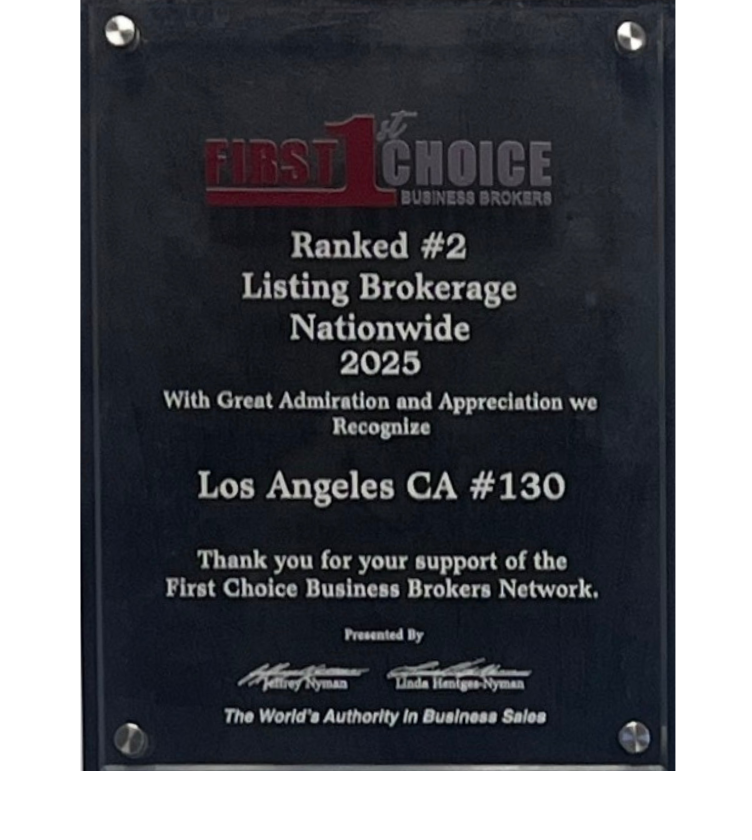
First Choice Business Brokers Los Angeles is led by Eric Johnson, Co-Owner and CEO (CA DRE #01118793), and Co-Owner and COO Michelle Koblas (CA DRE #02248957), backed by a team of licensed brokers and agents based at 11900 W Olympic Blvd #480, Los Angeles, CA 90064. The office was recently named the #2 producing brokerage in the national First Choice Business Brokers franchise, and the broader network has listed and managed over $15 billion in business transactions.
That local footprint matters. A broker working the Los Angeles market daily understands how a Silicon Beach tech company gets valued differently than a San Fernando Valley service business, and how to market each one to the right buyer pool.
Ready to Talk Through Your Exit?
Selling a business is a process, not a single event, and having someone manage that process changes the outcome. If you're ready to explore what selling looks like for you, First Choice Business Brokers Los Angeles offers a free, confidential consultation.
Call (424) 677-2688 or visit
thebusinessbrokerslosangeles.com to get started.
Disclaimer: First Choice Business Brokers (FCBB) Los Angeles is a business brokerage firm. This content is for informational purposes only and does not constitute legal, financial, or tax advice. We recommend that all parties involved in a business transaction seek the counsel of a qualified CPA or Attorney. FCBB facilitates the exchange of information but does not perform due diligence on behalf of the client.
Recent articles for you