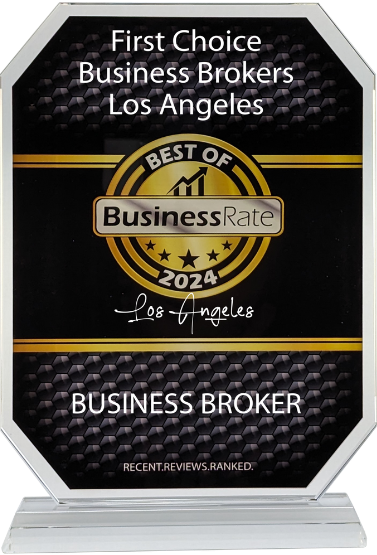
How to Get Your Local Business Noticed in Los Angeles

Understanding The Importance Of Local SEO

Local SEO is all about making sure your business shows up when people in Los Angeles search for what you offer. It's different from regular SEO because it focuses on a specific geographic area. For a business like First Choice Business Brokers Los Angeles, local SEO can be a game-changer.


Enhancing Online Visibility

Think of it this way: if someone searches "business brokers near me," you want First Choice Business Brokers Los Angeles to be one of the first results they see. That's what local SEO does. It makes your business more visible to people who are actively looking for your services in your area. It's not just about being online; it's about being visible to the right people.


Attracting Local Customers

  • Local SEO helps you connect with customers who are ready to buy.
  • These are people who live nearby and are actively searching for what you offer.
  • By targeting your efforts locally, you're more likely to attract customers who will actually walk through your door (or contact you online).

Local SEO is like putting up a giant sign in your neighborhood that says, "We're here, and we have what you need!"


Building Brand Credibility

  • Showing up in local search results builds trust with potential customers.
  • People tend to trust businesses that appear prominently in search results.
  • A strong local SEO presence can help establish First Choice Business Brokers Los Angeles as a reputable and reliable option in the community.


Strategies For Optimizing Google Business Profile

Your Google Business Profile (GBP) is super important for getting found online, especially if you're a local business. Think of it as your digital storefront. For businesses for sale in Los Angeles, or those considering buying a business in LA, a well-optimized GBP can significantly impact visibility. It's not just about having a profile; it's about making it work for you. Let's look at how to make your GBP shine, which is especially important in a competitive market like Los Angeles business opportunities.


Ensuring NAP Consistency

NAP stands for Name, Address, and Phone number. Making sure this info is exactly the same everywhere online is key.


  • Check your website, Yelp, Facebook, and any other online directories.
  • Even small differences can confuse search engines.
  • Use a consistent format (e.g., "Street" vs. "St.").


Inconsistencies in your NAP data can negatively impact your search ranking. Search engines use this information to verify your business's existence and location. If the information is inconsistent, it can create doubt and lower your ranking.


Utilizing High-Quality Images

Pictures are worth a thousand words, right? This is especially true for your GBP. For those selling a business in Los Angeles, good photos can attract potential buyers.


  • Showcase your storefront, products, or services.
  • Include photos of your team to add a personal touch.
  • Make sure the images are well-lit and high-resolution.


Encouraging Customer Reviews

Reviews build trust. People often check reviews before deciding to visit a business or use a service. For business brokers in Los Angeles like First Choice Business Brokers Los Angeles, positive reviews are gold

.

  • Ask satisfied customers to leave a review.
  • Respond to all reviews, both positive and negative.
  • Address any concerns professionally and promptly.


Leveraging Local Citations For Increased Visibility

Citations are basically mentions of your business online. Think of it like this: the more places your business is listed with the correct info, the more Google trusts that you're a real, established business. This is one of the important local business advertising tips.


Getting Listed In Local Directories

Getting your business listed in online directories is a pretty straightforward way to boost your visibility. It's like planting seeds all over the internet that point back to your website.


  • Make sure your NAP (Name, Address, Phone number) info is consistent across all listings. Typos or variations can confuse search engines.
  • Focus on directories that are relevant to your industry. If you're First Choice Business Brokers Los Angeles, look for business directories or real estate-related listings.
  • Don't just submit your info and forget about it. Keep your listings updated with current hours, services, and photos.


Engaging With Industry-Specific Platforms

Beyond general directories, look for platforms that cater specifically to your industry. These can be a goldmine for reaching a targeted audience.


  • For First Choice Business Brokers Los Angeles, think about platforms for business sales, commercial real estate, or even franchise opportunities.
  • Actively participate in these platforms. Don't just create a profile; engage in discussions, answer questions, and share helpful content.
  • Make sure your profile includes a link back to your website to drive traffic and improve your search ranking.


Building Backlinks From Local Websites

Backlinks are links from other websites to yours. They're like votes of confidence from other sites, telling Google that your website is trustworthy and authoritative. Getting backlinks from local websites is especially helpful for improving your local search ranking.


  • Reach out to local bloggers, news outlets, or community organizations and offer to contribute content or partner on a project.
  • Sponsor local events or charities and ask for a link back to your website on their event page.
  • Look for opportunities to get your business mentioned in local news articles or blog posts. This is a great way of promoting small businesses in LA.


Think of local citations and backlinks as building a network of trust around your business online. The more connections you have, the stronger your online presence will be. It takes time and effort, but it's a worthwhile investment for long-term success.


Creating Location-Specific Content

To really connect with potential customers in Los Angeles, you need content that speaks directly to them. Generic content just won't cut it. Think about what makes each neighborhood unique and how you can tailor your message to resonate with those specific areas. First Choice Business Brokers Los Angeles understands the importance of hyper-local marketing.


Targeting Niche Neighborhoods

Los Angeles isn't just one big city; it's a collection of distinct neighborhoods, each with its own vibe and character. Crafting content that acknowledges and celebrates these differences can significantly boost engagement. For example, a blog post about the best brunch spots in Silver Lake will attract a different audience than one about family-friendly activities in Santa Monica. Consider these points:


  • Research the demographics and interests of each neighborhood you want to target.
  • Create dedicated landing pages for key neighborhoods.
  • Use local imagery and language to create a sense of familiarity.


Incorporating Local Keywords

Keywords are still important, but it's about how you use them. Stuffing keywords into your content is a big no-no. Instead, focus on naturally weaving in terms that people in Los Angeles would actually search for. Think beyond just "business broker" and consider things like "sell my business in downtown LA" or "buy a business in the South Bay".


  • Use keyword research tools to identify relevant local search terms.
  • Incorporate location-specific keywords into your website content, meta descriptions, and image alt text.
  • Focus on long-tail keywords that include specific locations and services.


Highlighting Community Involvement

People want to support businesses that care about their community. Showcasing your involvement in local events, charities, or initiatives can build trust and loyalty. It's not just about selling; it's about being a part of the fabric of Los Angeles.


Showing that your business is invested in the local community can significantly improve your reputation and attract customers who value supporting local businesses. It's a win-win situation: you're doing good and building your brand at the same time.


  • Sponsor local events and share photos and updates on social media.
  • Partner with local charities or non-profit organizations.
  • Create content that highlights your contributions to the community.


Engaging With The Local Community

It's easy to forget that your business exists within a real, physical community. Getting involved can make a big difference. It's not just about marketing; it's about building relationships and showing that you care about Los Angeles. For a business like First Choice Business Brokers Los Angeles, this is especially important, as trust and local connections are key to success

.

Sponsoring Local Events

Think about sponsoring a local event. It could be a neighborhood fair, a school fundraiser, or a charity run. Sponsoring events gets your name out there and shows you support the community. It's a good way to connect with people in a relaxed setting. Plus, it's often a tax write-off!


Collaborating With Local Influencers

Local influencers can be a great way to reach a wider audience. These aren't necessarily celebrities; they're just people with a strong local following. Partnering with them can introduce your business to new customers. It's like getting a recommendation from a trusted friend.


Participating In Community Initiatives

Look for opportunities to participate in community initiatives. This could mean volunteering at a local food bank, cleaning up a park, or supporting a local cause.


Getting involved shows that you're not just in it for the money. It builds goodwill and strengthens your connection to the community. People are more likely to support businesses that give back.


Here are some ideas:

  • Offer your services for a local charity auction.
  • Host a workshop or seminar on a topic related to your business.
  • Partner with other local businesses on a joint project.


Utilizing Social Media For Local Engagement

Social media is more than just posting pictures; it's about connecting with your local audience. For a business like First Choice Business Brokers Los Angeles, it's a chance to show you're part of the community, not just another company.


Promoting Local Offers

Think about what makes your business unique to Los Angeles. Run contests specific to the area, or offer discounts for local events. It's a great way to get people talking and walking through your door. Here are some ideas:


  • Flash sales tied to local events.
  • Exclusive discounts for residents of specific neighborhoods.
  • Partnering with other local businesses for joint promotions.

Sharing Community Stories

Don't just talk about yourself. Share stories about your neighborhood, local events, or interesting people in the community. It shows you care about more than just making a sale. It's about building relationships. Here's how:


  • Highlight local artists or businesses.
  • Share news about community events and initiatives.
  • Feature customer stories and testimonials.


Interacting With Local Customers

Social media is a two-way street. Respond to comments, answer questions, and participate in local conversations. Show people you're listening and that you value their input. It's about being present and engaged. Here are some ways to do it:


  • Respond promptly to all comments and messages.
  • Ask for feedback and suggestions from your followers.
  • Run polls and Q&A sessions to engage with your audience.


Social media is a powerful tool for local businesses. It's not just about advertising; it's about building relationships, fostering community, and showing that you're invested in the area. It's about being a good neighbor and a valuable member of the community.


Monitoring And Analyzing SEO Performance

It's easy to set up your Google Business Profile and then just... forget about it. But you really need to keep an eye on how your SEO efforts are doing. Regular monitoring and analysis are key to understanding what's working and what's not. Think of it like checking the engine of your car – you wouldn't drive without knowing if everything's running smoothly, right?


Using Google Analytics

Google Analytics is your best friend. It gives you a peek into how people are finding and using your website. Here's what you should be looking at:


  • Where your website traffic is coming from (organic search, referrals, etc.).
  • Which pages people are landing on and how long they're staying.
  • The bounce rate (are people leaving right away?).


This data helps you see if your SEO efforts are actually bringing in the right kind of traffic. First Choice Business Brokers Los Angeles can use this data to see if their website is attracting potential business buyers and sellers.


Tracking Keyword Performance

Keywords are the words people type into Google to find businesses like yours. You need to know:


  • Which keywords are bringing people to your site.
  • Where your website ranks for those keywords.
  • If your rankings are improving or declining.


There are tools out there that can help you track this, like SEMrush or Ahrefs. Keep an eye on your main keywords and see if you need to adjust your strategy.


Adjusting Strategies Based On Insights

Okay, you've got all this data. Now what? It's time to make some changes based on what you're seeing. For example:


  • If a certain keyword isn't performing well, try a different one.
  • If your bounce rate is high on a certain page, improve the content.
  • If you're not getting enough local traffic, focus more on local SEO tactics.


Think of SEO as an ongoing experiment. You try something, see how it works, and then adjust. It's not a one-time thing. You have to keep at it to see real results. If you are a business broker, you need to keep up with the trends to stay ahead of the competition.


Final Thoughts on Boosting Your Local Business in Los Angeles

In a city as bustling as Los Angeles, getting your business noticed can feel like a daunting task. But with the right approach, it’s totally doable. Focus on local SEO strategies, keep your Google Business Profile updated, and engage with your community. Don’t forget to use social media to connect with potential customers. By following these tips, you can improve your visibility and attract more local clients. Remember, it’s all about being present where your customers are looking. So, roll up your sleeves and get to work—your business deserves to shine in this vibrant city!

A picture of a city street with palm trees and a sign that says first choice

This article is for informational purposes only and does not constitute professional marketing, financial, or legal advice. Business visibility and SEO results may vary. Consult a qualified expert for personalized strategies.


Consult Now!

Recent articles for you

August 21, 2026
Searching for merger and acquisition services in Los Angeles usually means you're on one side of a deal, but which side changes everything about the service you actually need. Direct answer: sell-side M&A advisory represents the business owner going to market, managing valuation, marketing, and buyer outreach on the seller's behalf; buy-side services, also called buyer representation, represent the person or company trying to acquire a business, running the search, vetting targets, and negotiating on the buyer's behalf. The two roles work toward opposite outcomes in the same transaction, which is exactly why they're structured as separate services. Quick Answer: Sell-side M&A advisory works for the seller and is paid by the seller at closing. Buy-side (buyer representation) works for the buyer, requires proof of funds upfront, and is typically compensated with a success fee upon closing a deal. Sell-side M&A services represent the business owner selling, handling valuation, marketing, and buyer identification. Buy-side services (buyer representation) refer to the person or company doing the acquiring, running the search, vetting targets, and negotiating on the buyer's behalf. Whichever seat you're in determines which service you need. What Sell-Side M&A Advisory Covers Sell-side representation is built around one goal: getting the business owner the best achievable outcome when selling. That typically runs through a structured process: Initial consultation to define the seller's goals and compile financial documentation Market Price Analysis, a valuation grounded in the business's actual financials and comparable transactions Marketing, confidential business profiles and outbound outreach to strategic buyers, not just a public listing Buyer pool development, vetting interested buyers, requiring signed NDAs, and confirming proof of funds before releasing sensitive information Negotiation and offer management, fielding LOIs and purchase agreements, sometimes across several rounds Due diligence and closing, coordinating with the buyer's CPA and attorney through to a neutral closing entity Throughout, the sell-side advisor's job is to protect the seller's price and terms, not to make the deal easiest for the buyer. What Buy-Side Services (Buyer Representation) Cover Buyer representation flips the relationship. Instead of marketing a business, the broker runs a custom search on behalf of someone trying to acquire one, often described as finding the needle in the haystack across a market flooded with generic listings. The process starts with the buyer clearly defining what they're looking for: industry, target income level, location, and deal size. From there: Proof of funds is required upfront. A broker won't commit real search time without confirmation the buyer can actually close. The search isn't limited to active listings. If the right business isn't currently for sale, the broker will reach out directly to "plant the seeds" with an owner who may consider selling down the road, a meaningfully different job than marketing a public listing. Negotiation runs in the buyer's favor. The broker negotiates price and terms on behalf of the buyer, not the seller. Compensation is typically a success fee. Buyer-side brokers are usually paid only once a deal actually closes, which is why proof of funds and a clear mandate matter so much upfront. The Practical Differences, Side by Side
August 21, 2026
If you're researching business valuation services in Los Angeles because you're weighing a sale, here's the direct answer: the biggest value-killers aren't the obvious ones. Sellers lose money by pricing off revenue instead of cash flow, failing to properly document add-backs, ignoring how much of the business rides on one or two customers, and walking into due diligence with financials that don't hold up to scrutiny. Every one of these is fixable before you go to market, which is exactly when fixing them actually helps your price. Quick Answer: The mistakes that most often cost LA sellers money are pricing off top-line revenue instead of cash flow, unsubstantiated add-backs, unaddressed customer concentration, and outdated market comparisons, all things a proper valuation catches before a buyer does. The valuation mistakes that cost Los Angeles sellers the most money aren't dramatic, they're things like pricing off revenue instead of cash flow, skipping add-backs, ignoring customer concentration, and going to market with messy books. Fixing these before you list, not after a buyer's due diligence team finds them, is what protects your price. #1: Pricing Off Revenue Instead of Cash Flow A business doing $3 million in revenue and a business doing $1.5 million can be worth the same amount, or the second one can be worth more, it depends entirely on what's left after expenses. Buyers value a business on its cash flow (Seller's Discretionary Earnings or EBITDA, depending on size), not its top line. Sellers who anchor their price expectations to revenue, or to what a competitor "sold for" without knowing the underlying multiple, routinely price themselves either out of the market or leave money on the table. #2: Add-Backs Without Documentation Add-backs, owner's salary above market rate, personal expenses run through the business, one-time legal costs, and similar items, are a legitimate part of showing a business's true earning power. The mistake is claiming them without paper trails. A buyer's CPA will challenge every add-back during due diligence, and unsupported ones don't just get rejected, they can undermine the seller's credibility on everything else in the financials. Document each one as you go, not retroactively when a buyer asks. #3: Ignoring Customer Concentration A business where one or two customers represent a large share of revenue looks strong on paper and gets discounted hard in practice. Buyers see customer concentration as risk: what happens to the business if that one relationship walks after the sale? Sellers who don't proactively address this (through diversification before selling, or at minimum a clear narrative and contracts that make the relationship transferable) are often surprised when it shows up as a lower offer or a request for an earnout tied to customer retention. #4: Relying on Outdated or Generic Comparisons "I heard a similar business sold for X" is not a valuation methodology, comparisons need to account for industry, deal size, growth trajectory, and how recently the comparable transaction closed. Buyer competition itself varies sharply by deal size: in the first quarter of 2026, 83% of deals over $5 million attracted at least three offers, and 18% drew ten or more bids, while smaller deals under $500,000 often received just one or two offers. That means the valuation dynamics for a Silicon Beach tech company and a San Fernando Valley service business aren't just different in multiple, they're different in how many buyers are actually competing for the deal, which itself affects where the final price lands relative to the initial number. #5: Emotional Pricing It's natural to price a business you built over 20 years based on how much of yourself is in it. Buyers don't price it that way. A Market Price Analysis grounded in your actual financials, industry standards, and comparable transactions, not sentiment, is what holds up once real offers start coming in. Sellers who skip this step and set their own number based on what they feel it's worth tend to sit on the market longer and eventually negotiate down further than they would have with a defensible number from the start. #6: Going to Market With Messy Books Even a genuinely strong business loses leverage if its financials don't reconcile cleanly. Buyers and their advisors read messy bookkeeping as risk, and risk gets priced in as a discount, or as a due diligence process that drags on long enough to kill momentum. Three years of clean, consistent financials, ideally reviewed by an accountant before you list, is one of the highest-leverage things a seller can do before a valuation even happens. What a Proper Valuation Actually Catches A comprehensive Market Price Analysis exists specifically to surface these issues before a buyer does, reviewing your assets, inventory, income statements, and intangible value against real market data and comparable transactions, rather than a single revenue multiple pulled from a general search. That's the difference between a number that survives due diligence and one that doesn't. Frequently Asked Questions 
July 29, 2026
A Los Angeles business valuation typically uses your Seller's Discretionary Earnings (SDE) multiplied by a market-based multiple, usually somewhere between 2x and 4x, depending on your industry, customer concentration, and financial documentation. In the 2026 LA market, a business earning $500,000 in SDE could sell for anywhere between $1.25 million and $2 million. The gap between those two numbers comes down to a handful of factors you can actually control before you list. Key Takeaways LA valuations run on SDE times a multiple, not just your P&L profit line 2026 multiples in Los Angeles typically fall between 2.5x and 4.0x SDE, depending on risk factors Customer concentration above 15-20% of revenue is a red flag for buyers and lenders Undocumented cash income has zero value in a formal sale A professional Market Price Analysis replaces guesswork with real comparable data If you're asking, "How much is my business worth?" you're already ahead of most Los Angeles owners. First Choice Business Brokers Los Angeles sees this question most often after a surprise offer lands, a partner dispute flares up, or an owner simply hits burnout and wants out. The problem is that most owners don't find out what their company is actually worth until they're already halfway through the door, and by then it's too late to fix the things that would have added real dollars to the sale price. This guide explains how valuation actually works for Los Angeles small businesses in 2026, using real market data rather than guesswork. Why Your P&L Isn't Your Valuation Your Profit & Loss statement is built for the IRS. It was never built to tell a buyer what your company is worth. That's where Seller's Discretionary Earnings, or SDE, comes in. SDE adds back your salary, one-time expenses, and personal perks run through the business to show a buyer what the company actually puts in an owner's pocket. This single number is the foundation of nearly every small business sale in Los Angeles. Once you know your SDE, a multiple gets applied to it, and that multiple is where most of the value gets won or lost. According to First Choice Business Brokers Los Angeles's own 2026 market analysis , a business with $500,000 in SDE could sell for $1.25 million at a 2.5x multiple, or as much as $2 million at a 4.0x multiple. That's a $750,000 swing based entirely on how "sellable" the business looks on paper. What Actually Moves Your Multiple A handful of factors push your multiple up or down, and most of them are fixable if you start early. Customer concentration: If one client accounts for 15-20% of your revenue, buyers and their banks see a serious risk. Lose that client after closing, and the buyer is stuck holding a hollowed-out company Documentation quality: Professional buyers and lenders only pay for income that shows up on tax returns and bank statements. Cash that never got reported is worth nothing in a formal sale Asset condition: During a Market Price Analysis, appraisers closely examine your equipment and inventory. If your books show $200,000 in equipment, but a chunk of it is broken or obsolete, your numbers lose credibility fast Recurring revenue and management depth: Buyers pay a premium for businesses that don't fall apart the moment the owner steps away Rising labor costs have squeezed margins across Southern California, but that isn't automatically bad news for your valuation. If you've adjusted pricing or implemented automation to protect profitability, that resilience actually strengthens your story for a buyer. The "Location Premium" Trap Los Angeles carries a location premium, and it's a double-edged sword that trips up many sellers. An HVAC company in the San Fernando Valley might command a higher multiple than a similar shop in Riverside simply because of the density of high-ticket residential contracts nearby. But here's the catch: that premium only counts if it's transferable. If your business runs on your personal relationships with local developers or property managers, a buyer isn't purchasing a location advantage. They're purchasing a building, and your relationships walk out the door with you. This is why comparable sales data across Southern California is notoriously inconsistent. Two businesses that look identical on paper can sell for very different multiples once a broker digs into what's actually transferable and what isn't. Why "Guessing" Costs You Real Money Basing your asking price on what a neighbor's shop sold for is one of the fastest ways to torpedo a listing. Buyers and their lenders will spot an inflated, unsupported number immediately, and a listing that sits too long starts to look distressed even if the business isn't. A formal Market Price Analysis replaces guesswork with comparable sales data, industry-specific multiples, and a defensible number you can actually negotiate around. That data-backed confidence is the difference between a seller who reacts to offers and one who drives the negotiation. You also don't need to wait for finalized tax returns to get moving. Year-end internal P&Ls can produce a working valuation now, which gets refined once your final numbers are ready. Frequently Asked Questions How is a business valued in Los Angeles? Most small and mid-sized LA businesses are valued using the Income Approach, which applies a multiple to your Seller's Discretionary Earnings. Market comparisons and asset-based approaches play a role too, but for companies under $10 million in revenue, SDE times a multiple does most of the heavy lifting. What SDE multiple can I expect in 2026? Multiples in the current Los Angeles market generally range from about 2.5x to 4.0x SDE, though your specific number depends on industry, customer concentration, documentation, and management depth. Does undocumented cash income count toward my valuation? No. Buyers and their lenders can only pay for income that's provable through tax returns and bank statements, so undocumented income adds nothing to your sale price. How often should I get a valuation? Even if you're years from selling, a valuation every couple of years helps you spot problems, like customer concentration or aging equipment, while there's still time to fix them. Do I need my final tax returns before getting a valuation? No. A broker can build a working valuation off your year-end internal P&Ls and refine it once your returns are complete. Trusted by Los Angeles Business Owners for Decades First Choice Business Brokers Los Angeles is led by Eric Johnson , Co-Owner and CEO (CA DRE #01118793), alongside Co-Owner and COO Michelle Koblas (CA DRE #02248957). The firm has helped list and manage over $15 billion in business listings across the First Choice Business Brokers network, and the Los Angeles office was recently ranked the #2 producing brokerage in the nationwide franchise system. Every valuation is built around Southern California's real market conditions, not national averages. From the entertainment and tech corridors of Silicon Beach to the industrial stretches of the San Fernando Valley, the team accounts for the specific dynamics that move multiples in Los Angeles, CA 90064 , and across the greater metro. Get Your Los Angeles Business Valuation Started  Knowing your number changes how you run your business, even if you're not selling next month. It tells you which levers to pull, which risks to fix, and what kind of exit is realistic on your timeline. Ready to find out what your business is actually worth? Contact First Choice Business Brokers Los Angeles at (424) 677-2688 or request a confidential Market Price Analysis today.